When people ask me if they should wear a tuxedo or a suit, I always smile. I have spent years helping grooms, business professionals, students, and even first-time attendees. Most people start by asking, “Aren’t they the same?”
They are not.
Not in how they look, what they’re for, or the message they send.
This guide explains the key differences in simple and clear language. I’ll tell you what’s important, what you can ignore, and how to pick the right one for your event without overthinking.
Real Differences Between Tuxedo and Suit
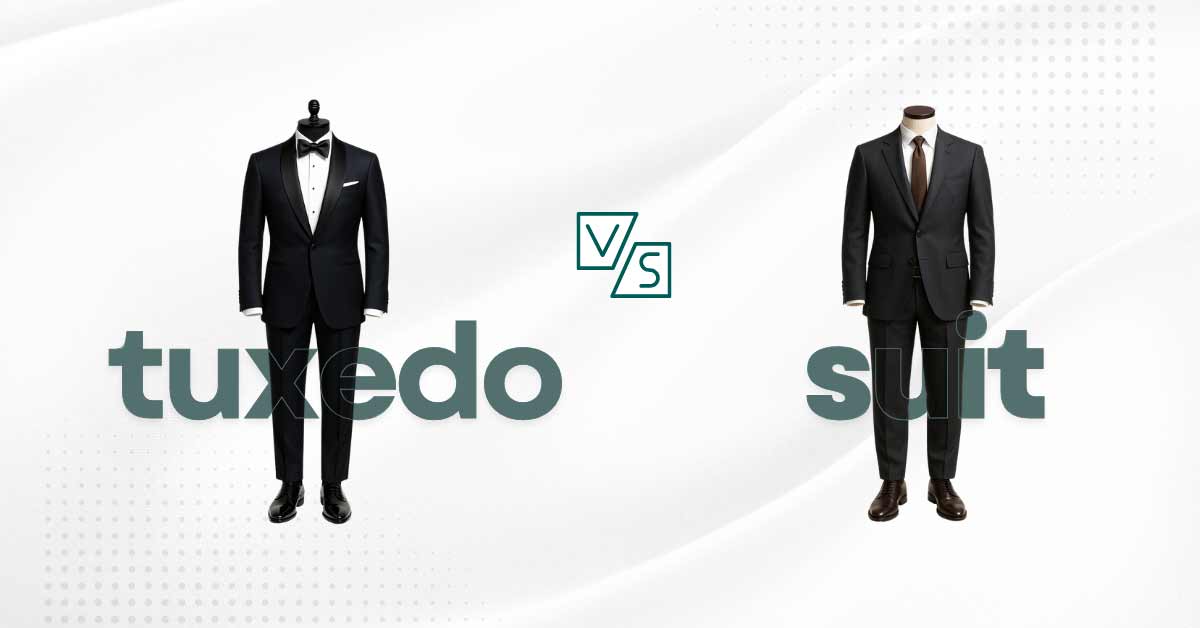
The main difference is that tuxedos have the same fabric all over, while tuxedos often include satin on parts like lapels, buttons, and pocket trims, which makes them shiny.
When you see a shiny edge around the lapel, that’s a tuxedo. Regular suits never have shiny parts and are usually plain, making them suitable for business or daytime wear.
In simple terms, if it shines, it’s a tuxedo; if it doesn’t, it’s a suit.
For a more precise and quicker comparison between suits vs tuxedos, see the table below.
| Feature | Tuxedo | Suit |
| Main Use | Formal evening events (weddings, galas, black-tie) | Daily wear, business, semi-formal events |
| Key Material Detail | Satin on lapels, buttons & side stripe | No satin; matching fabric throughout |
| Shirt Style | White tux shirt (pleated or bib front) | Spread-collar or point-collar dress shirt |
| Tie Type | Bow tie (classic black) | Neck tie or bow tie; more flexible |
| Jacket Lapels | Peak or shawl, always satin-faced | Notched, peak, or shawl; fabric-covered |
| Buttons | Satin-covered, fewer buttons | Plastic/metal buttons, more style options |
| Shoes | Patent leather preferred | Any dress shoes (oxford, derby, loafers) |
| Color Range | Mostly black, midnight blue, white | Wide range of colors and patterns |
| Best Time to Wear | After 5 PM, formal occasions | After 5 PM, formal occasions |
| Overall Vibe | Polished, ceremonial, high-formal | Versatile, modern, adaptable |
How Each One Feels When You Wear It
Wearing a tuxedo instantly changes your posture. It makes your shoulders look sharper, your waist narrower, and your body appear longer and more streamlined. People often say it makes the moment feel special and memorable.
A suit, on the other hand, feels more comfortable and versatile. It’s suitable for work meetings, weddings, dinners, and many everyday situations. While a tuxedo signals that a special occasion is happening, a suit suggests you’re prepared for anything.
That’s the emotional difference between a tuxedo and a suit, even though people usually don’t think of it that way. You’ll notice the difference right away.
Jacket Details That Differentiate a Tux and a Suit
The jacket highlights the primary distinction between a suit and a tuxedo.
Lapels
Tuxedo lapels are covered with satin and can be in shawl, peak, or sometimes notch styles. Their shiny surface catches the eye and frames the face. The lapels on a suit match the fabric of the jacket. Usually, notch lapels are more common, while peak lapels are used for more formal suits.
Buttons
Tuxedo buttons are covered in satin, making them soft and smooth. Suit buttons are usually made of plastic, horn, or acrylic. It’s a small detail, but it can make a big difference.
Breast Style
Most tuxedos are single-breasted with one or two buttons. Double-breasted tuxedos are also available, but they are more eye-catching and less common for occasions like weddings or proms. Suits come in many styles: single-breasted, double-breasted, with two or three buttons, or as full three-piece suits.
Knowing this, you can quickly spot the differences even without understanding many technical terms.
Differentiated Suit and Tuxedo From Pants
If you have a pant with a satin stripe but no belt loops and a waistband designed to be covered by a vest, it’s a tuxedo. If the pants have belt loops and are made of the same fabric all over with a non-shiny finish, then it’s a suit.
People often ask if they can wear a belt with a tuxedo. My answer is always no because a belt breaks the clean, smooth look and makes the outfit less formal.
The main difference between a tuxedo and a suit is the fit. A tuxedo aims for a smooth, sleek look from your shoulders to your shoes. A suit is more flexible and allows for more style choices.
Strict vs Flexible Shirts
Tuxedo shirts are always white. They can be pleated or smooth and usually have French cuffs for cufflinks. The collars are often wingtip or classic point.
Suit shirts allow more variety. You can choose different colors, patterns, stripes, or checks depending on the mood or season. They usually have button cuffs or French cuffs.
If you like changing styles, a suit shirt is more fun to wear. But if you want a simple, formal look for the evening, the tuxedo shirt is the best choice.
Which Ties and Accessories to Wear With Whome
Tuxedos usually come with bow ties. You can wear long ties too, but in my experience, a bow tie looks better with the satin lapels.
Suits have more options: bow ties, long ties, ties with patterns or textures, seasonal ties, or no tie at all.
That’s why choosing between a tuxedo and a suit is important for weddings. If you want a classic, timeless look, a tuxedo is the best choice. If you prefer a more relaxed, creative style, a suit gives you more options.
The accessories also follow this pattern:
Tuxedos are worn with:
cufflinks, French cuffs, pocket squares, cummerbunds or vests, and shiny black shoes.
Suits are worn with:
belts, regular leather shoes, suspenders, colorful ties, patterned shirts, and different vests.
For socks, fun socks work with both outfits.
Occasions Guide: Suit vs Tuxedo
You can wear Tuxedos at:
- Black-tie weddings
- Award ceremonies
- Gala nights
- Charity balls
- Proms
- New Year’s Eve parties
- Any event that says explicitly “Black Tie”
They were made for evening, but now you often see them at daytime weddings when the party goes into the night.
Wear suits at:
- Business meetings
- Job interviews
- Daytime or outdoor weddings
- Semi-formal gatherings
- Graduations
- Funerals
- Dinner events
A dark, good-fitting suit can be worn almost anywhere. That’s why I usually advise clients to have at least two quality suits, even if they already own a tuxedo.
How Color Affects the Tuxedo vs Suit Choice
Tuxedos are formal clothing often in colors like black, midnight blue, navy, burgundy, deep green, and sometimes velvet. White dinner jackets are also considered tuxedos, especially for summer weddings.
Suits come in many colors and styles, including navy, charcoal, grey, black, brown, tan, and patterns like checks and pinstripes.
If you want to show your personality or be more creative, a suit offers many more options.
Some Popular Real Stylings
I have seen many grooms, groomsmen, and party guests try on both choices. Here are some real examples I’ve found best.
- A groom dressed in a dark blue tuxedo with a shawl collar, accessorized with black items.
- A brown velvet tuxedo worn at a winter wedding.
- A black suit with a red tie and brown shoes for a holiday event.
A navy suit with a floral tie for a summer garden wedding.
Tuxedos look really good in soft indoor lighting, while suits usually photograph better in natural outdoor light. That’s why many photographers choose tuxedos for evening weddings.
Cost Breakdown: Should You Rent or Buy?
Renting a tuxedo or suit typically costs between $159 and $169, while purchasing a good-quality one can range from $275 for a basic model to over $1,200 for high-end fabrics.
A tuxedo is a long-term investment. You might not wear it often, but you’ll need it for big events. A suit is more practical and can be worn many times. Most people start with:
- One navy suit
- One charcoal or black suit
- One tuxedo for special events
Basically, buy a suit because you’ll wear it a lot; rent a tux for single events, but get one if you go to fancy parties 2 or 3 times a year.
How to Pick the Right One
When I need to help my client, I simply ask them a few questions, and boom, this clears up what to wear. The questions I ask are:
1. Does the invitation say to have ‘Black Tie’?
If so, then opt for the tuxedo.
2. Is the event formal and going to happen in the evening?
A tuxedo is best for a formal event.
3. Is the program happening in a day and semi-formal?
If so, the suit is the best.
4. Do you want to stand out or blend in with the crowd?
- If you want to stand out, then go with a Tuxedo.
- And if you want to blend in, choose a suit.
5. Do you want freedom with accessories?
If yes, then go with the suit.
This simple checklist has helped 95% of my clients choose, but some still prefer their own choices, which is okay.
Final Thought
Choosing between a suit and a tuxedo doesn’t have to be confusing. A suit is comfortable, versatile, and gives you freedom to move. A tuxedo is more elegant and special, perfect for formal events. When you know the type of event, the time of day, and the setting, it becomes easier to make a choice.
A suit helps you blend in and feel confident, while a tuxedo makes you stand out intentionally.
FAQs
Q1. When Was the Tuxedo Invented?
The tuxedo was invented in the 1860s by the Prince of Wales, and later it entered America through Tuxedo Park.
Q2. Can I wear a long tie with a tuxedo?
You can wear a long tie with a tuxedo, but for a better look, choose a bow tie that matches the tuxedo well.
Q3. Are white dinner jackets real tuxedos?
White dinners are formal tuxedo events, usually held in warm weather like summer, often called white tie events.
Q4. Which is more formal, a Tuxedo or a Suit?
A tuxedo is more formal than a suit and is suitable for very formal events. A suit is appropriate for semi-formal professional occasions.