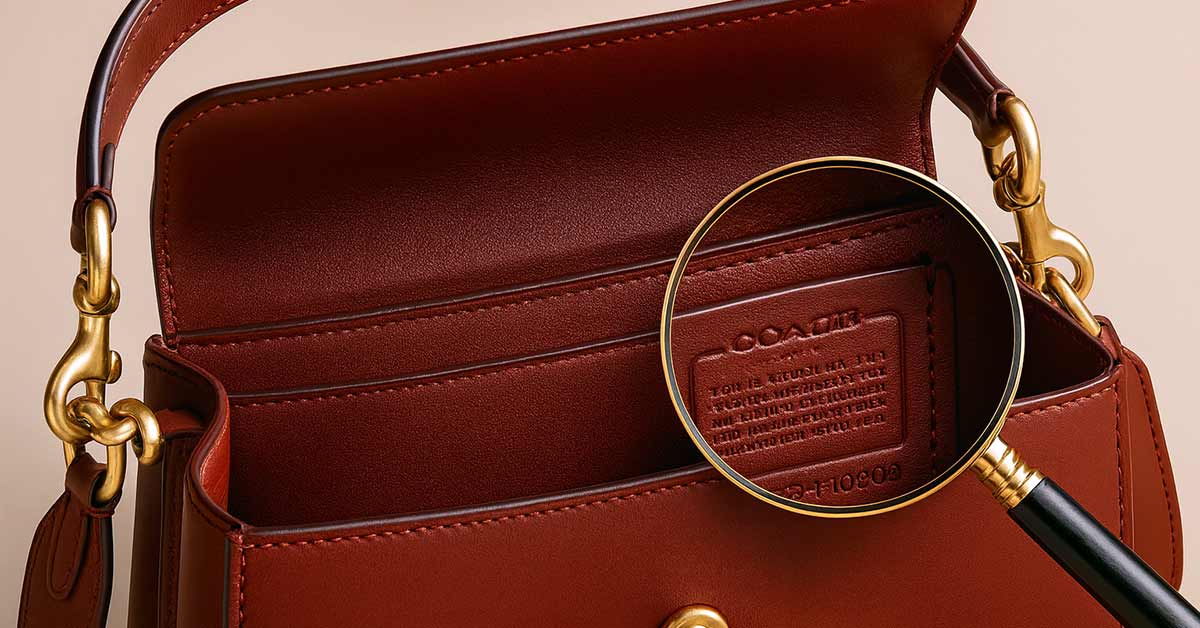
If you’ve ever checked the tag inside a Coach bag to see where it was made, you’ve probably noticed it varies. Some say China, some say Vietnam, and others say the Philippines or India. If you find one that says “Made in Korea” or “Made in Italy,” you might wonder if it’s real.
People often ask where Coach bags are actually made today. The answer is more interesting than you might think and goes beyond just listing countries.
This guide explains where Coach makes its bags, why they chose those places, and what that means for quality, worth, and whether they’re genuine. The goal is to give you simple, clear, reliable information.
A Quick Look at Coach’s Background
Coach started in 1941 in New York City as Gail Leather Products, a small family-run workshop making wallets and men’s leather goods. After 1946, Miles Cahn joined and introduced a special leather used in baseball gloves. This leather made Coach purses tougher, softer, and more durable, helping build its reputation for American-made quality.
From the 1940s to the 1980s, almost all Coach bags were made in the U.S., especially in a factory in New York City. These bags are now called the “golden age” bags because they used thick leather and had simple, timeless designs.
As demand increased from the 1970s to the early 2000s, Coach needed to produce more bags. To do this, they expanded manufacturing overseas to meet high demand, reduce costs, and access skilled labor in leather goods.
Where Are Coach Bags Made Today?
Coach products are made in many countries, mainly in Asia. The main places where they are built are:
- Vietnam
- China,
- Philippines
- India
- Cambodia
- Indonesia
- Thailand
A small number are still made in the United States, but that’s less than 5% of the total. Coach also works with factories in Turkey and the Dominican Republic when needed. Let’s look at each country one by one.
1. Vietnam: Coach’s Largest Manufacturing Hub
If you buy a recent Coach bag, it’s likely made in Vietnam. Over the past ten years, Vietnam has become the main place where Coach makes its bags.
There are a few reasons for this:
- Skilled workers who are experienced in working with leather and synthetic materials
- Modern factories that are well-equipped
- Lower labor costs than in China
- Government incentives to support manufacturing
- Good ports and shipping facilities
Coach also uses a lot of synthetic leather from Taiwan Fulin Plastic, which supplies 50–70% of the synthetic leather in Coach bags. Vietnam specializes in turning this material into strong, durable bags.
Many popular bags, like the Tabby, Cassie, Swinger, Willow Tote, and City Tote, are often made in Vietnam. The country handles everything from cutting large pieces of material to reinforcing the bags and doing detailed hand stitching.
2. China: Key Production Base
China is still a key part of Coach’s manufacturing process. It has been the leading country for Coach purse production and continues to play an important role, especially for affordable and mid-priced bags.
Most factories are in Guangzhou, Dongguan, Shanghai, and Jiangsu.
China has many benefits for manufacturing:
- Many skilled workers
- Modern equipment
- Complete supply chains for leather, hardware, and packaging
- Quick production times
- Cost savings from large-scale production
Some production has moved to Vietnam and other countries because of tariffs and trade issues, but Coach purses made in China still maintain high quality. Many people mistakenly think that Chinese-made bags are low-quality, but that’s not true of Coach. The brand controls the quality, not the country where they are made.
3. The Philippines: Skilled Handcrafting and Reliable Quality
The Philippines is a key manufacturing center for Coach, especially for styles that require detailed hand stitching. The country has skilled leatherworkers, lower labor costs than China, quicker access to global markets, a stable political environment, and government support for leather goods. Luen Thai Holdings invested over $8.4 million to build or upgrade Coach’s partner factories there, showing how important the region is to Coach’s long-term plans.
India: Growing Hub for Small Leather Goods
India plays a special role in Coach’s global network. While Vietnam and China mainly produce large quantities of items, India focuses on smaller, more detailed products.
In India, they make men’s bags, wallets, belts, coin purses, and jewelry. Some styles, like the Warren lychee tote and men’s chest bags, are made there. Bags from India often have a tag that says “Origin India.”
India is also a major leather producer, producing about 3 billion square feet each year, which is around 13% of the world’s leather output. Coach works with environmentally-friendly tanneries in India. Because India has a lot of skill in making custom and limited-edition products, some exclusive Coach models come from there.
Cambodia and Indonesia: Supporting High-Volume Production
Cambodia and Indonesia help Coach keep up with demand, especially during busy times. They focus on making large quantities of products with consistent quality at a reasonable cost. Their factories follow strict rules set by Coach’s global quality team, which trains workers to perform key tasks such as sewing, edge painting, and assembly.
Thailand: Quality Craftsmanship for Luxury Items
Thailand is famous for its talented leatherworkers who pay close attention to detail. Coach uses factories in Thailand for some of its higher-quality or special items. Although fewer items are made there, the quality of the craft is outstanding.
The United States: Limited, High-End, and Special Orders
Only a small part of modern Coach bags, less than 5%, are made in the U.S. These include: reissue heritage styles, high-end limited collections, custom orders, and bags that need special leather treatments.
Coach has a workshop in New York for these projects. U.S. manufacturing costs more, but it helps keep the brand’s heritage image and allows Coach to create exceptional designs. Some of the materials for these U.S. bags also come from American tanneries, especially for extraordinary leathers.
Countries Where Coach Does Not Manufacture In
This is important because many fake Coach bags use specific labels: Coach has never made purses in Korea or Italy. If you see a Coach bag labeled “Made in Korea” or “Made in Italy,” it’s probably a fake. The only exception is old wheel-along bags that may have codes starting with “F-,” but even these weren’t entirely made in Korea.
Fake Korean Coach bags often have mistakes like:
- wrong creed patches,
- serial numbers without “No.”
- strange fonts,
- poor stitching
|| Also Read: Coach Serial Number Lookup – Spot Real vs Fake Bag
What Does the “Made In” Tag Really Mean?
The “Made In” label tells you where the bag was put together, not where the materials come from. This is how most big brands do it.
For example, a purse made in Vietnam might have:
- Italian leather
- Hardware from China
- Synthetic leather from Taiwan
- Thread from India
Because Coach sources materials from all over the world, a bag made in China isn’t necessarily worse than one made in Vietnam or the Philippines. The brand has strict quality rules that apply everywhere, no matter where the bag is assembled.
What Materials Does Coach Use?
Coach gets materials from many countries based on the style. Common materials include Italian leather, original Glovetanned leather, sports calf leather, suede, coated canvas, jacquard fabric, brass and nickel hardware, and toggle and turnlock closures. Some products in the Coachtopia line use eco-friendly options like bonded leather or regenerative leather.
How Coach Ensures Quality and Authenticity?
Coach ensures all factories follow strict quality standards, including neat stitching, smooth paint edges, consistent logos, durable hardware, strong linings, and reliable zippers, such as YKK or custom ones.
Each authentic Coach bag has a special serial number inside the creed patch, showing where and when it was made. If a bag is very cheap or has strange “Made In” tags, especially online, it could be a warning sign.
Why Coach Manufactures in Multiple Countries
Coach’s manufacturing strategy worldwide aims to balance quality, cost, speed, skilled labor, and global demand. No single country can provide all of these, so Coach spreads production across Asia and maintains a small workshop in the U.S. This helps protect against supply chain problems and keeps production steady.
How Long Do Coach Bags Last Today?
Vintage Coach bags from the 1970s to 1990s are known for lasting many years. They were made with thick leather and simple designs. Modern Coach bags are lighter, softer, and more trendy. Most last 2 to 4 years with regular use, and can last longer if cared for. Outlet bags are made with slightly cheaper materials but are still durable enough for everyday use.
Final Thoughts: So, Where Are Coach Bags Made?
Coach bags today are primarily made in Vietnam, China, the Philippines, India, Indonesia, Cambodia, and Thailand. A few are still made in the United States. All these places follow strict quality rules from Coach and its parent company, Tapestry, Inc.
If you’re worried that where the bag is made affects its quality, don’t be. Coach controls its production carefully, no matter where the bag is assembled. What really matters is the design, materials, craftsmanship, and authentic branding — not the country on the label.
Whether you’re buying new, resale, or vintage, knowing where Coach bags are made helps you shop confidently and avoid fake bags.